Pages

Gambit Communications® Network Simulation

Gambit Communications® is a provider of tools for simulating servers, networking and storage devices.

Network management software

MIMIC Simulator for testing your network management software.

Network Management Apps

MIMIC Simulator for testing your network management software. SNMP Simulation.

MIMIC Web Simulator

Create a large virtual lab with Gambit Communications.

IOS Simulator

IOS based apps Using MIMIC Simulator.

Tuesday, 31 March 2015

SNMP Simulator – An Overview

An SNMP Simulator is a kind of computer simulation that simulates the SNMP (Simple Network Management Protocol) interface. Opposite to network simulation, which copies the performance of a network within a computer system, the SNMP simulator in reality interfaces with outside systems, for instance Network Management Application software into believing it’s talking through the SNMP protocol to one or more devices, just like a flight simulator enables a pilot to believe they’re flying an airplane.

mimic3SNMP simulators are employed for development, testing and training of network management system software. Prior to the arrival of simulators, real physical equipments were used. The measurability of simulators considerably decreases the expenditure in this area.

Aspects in this area differ extensively, from the no-cost to business offerings. It isn’t unusual for advanced simulators to simulate thousands of devices on a common PC hardware. Setting up any number of examples on any number of device types is standard functionality. The improved simulators will permit to create any kind of vibrant circumstances, both in terms of MIB object behaviour and trap generation as well. Since present network management principles encompass a set of protocols, the enhanced simulators incorporate the present network management standards, such as command line interfaces, NetFlow, etc.

Normally, SNMP simulators are used in laboratories which include both Network Management Application software and devices to use the software for the above purposes.


MIMIC ships with a large number of pre-compiled MIBs, networks and devices from the leading networking companies.

Follow Gambit Communications on:-
facebook twitter linkedin

Tuesday, 24 March 2015

Many Advantages of NetFlow

The capability to distinguish IP traffic and understanding the source, the traffic destination, the time of day, the application deployment is vital for network accessibility, performance & troubleshooting. By evaluating NetFlow data, a network manager can recognize the cause of clogging; find out the class of service for every user and application; and recognizing the origin and destination network for your traffic. Scrutinizing IP traffic flows facilitates more precise capacity planning and makes sure that resources are employed properly in support of business objectives. This gives business chances that help validate and optimizes the huge investment involved in constructing a network ranging from traffic engineering to comprehending network detailed behaviour. Understanding behaviour enables users to execute new IP services & applications with self-confidence.

Here in this article we will talk about the advantages or gains of NetFlow. One thing in particular that differentiates NetFlow based traffic monitoring from the conventional SNMP reliant systems is the capability to exemplify traffic applications & patterns. Understanding what the traffic is, who it’s from, how and where it flows is vital for network performance as well as troubleshooting. For example, it assists network managers determine where to use QoS as it plays a crucial part in network security to identify network propagated worms, DoS (Denial-of-Service) attacks and other unwanted network events.

NetFlow information makes sure that resources are used effectively in support of business objectives. Furthermore, it facilitates solutions to several general network problems comprising:

• Network security susceptibilities and inconsistency detection
• Troubleshooting and recognizing network pain points
• Verify new applications and their network impact
• Recognition of illegal WAN traffic
• Corroboration of QoS parameters
• Decrease in peak WAN traffic
• Network productivity
• Long-term agreement issues
• Use of network resources
• The effect of changes to the network

Advantage of using Cisco NetFlow:

• Flexibility, measurability of flow data beyond conventional NetFlow
• The aptitude to monitor a wider variety of packet information producing new information regarding  network behaviour not accessible today.
• Improved network irregularity and security exposure
• User configurable flow information to execute modified traffic recognition and the aptitude to focus and check specific network behaviour.
• Improved manage deployments in the network
• Convergence of manifold accounting technologies into 1 accounting mechanism

http://www.gambitcomm.com/site/images/netflow_sim_constant1.jpg

 
Follow Gambit Communications on:-
facebook twitter linkedin


Tuesday, 24 February 2015

Open Source and Commercial Network Simulators

We will discuss about some fundamental concepts associated with network simulators, in this post. We will also attempt to distinguish some confusing crucial facets of network simulator which make uncertainty amongst readers.

Network simulation & simulator:

With the assistance of network simulation, any network can be modelled effortlessly. The fundamental idea of this model is to monitor the equivalent outcomes for evaluating configurations, performance, scalability, and various features of networking applications. Typically, it is extremely simple to study diverse set-ups at very low cost and try out networking changes instead of testing on a real network. However, network simulators aren’t perfect. They can’t ideally model the entire details of the networks. Nonetheless, if well simulated, they’ll be close enough so as to offer the researchers a significant understanding into the network under check, and how transformations will have an effect on its function.

mimic_netflow_configTypes of network simulators:

Network simulators classified into diverse kind on the base of some norms such as they’re commercial or free, and they’re simple or complex.

Open source & commercial simulators:

Several network simulators are open sourced, which signifies that they’d offer the source code to its users for free. In such simulators the whole thing is open and everybody can contribute to it. There is no restriction on its interface, so it is also open for further enhancements. Due to its adaptability, new developments of latest technologies are done in a very quickly compared to commercial network simulators.

At the same time, the commercial network simulator signifies that they wouldn’t offer the source code of its application and the associated packages to its user, for free. To get its certified version users should have to disburse for total software, or they’ve to disburse exact packages that meet their exact usage needs. Commercial simulator has its advantages and disadvantages. The major benefit is that it supervised and sustained constantly by some professional staff of the organization, and it usually has comprehensive and updated documents. However, open-source simulator is unfavourable in this facet because there’re not adequate dedicated individuals working on its documents. This develops many serious issues when diverse editions come with several new things, and it’ll become more complicated to trace or comprehend the earlier codes without any appropriate documentation.

Overall, we can say for effective network management, network simulators are must have tools. Now, it depends on you which kind of network simulator you choose.

Follow Gambit Communications on:-
 
facebook twitter linkedin

Monday, 23 February 2015

Key Features of Network Simulators

It’s very tough to set up a network in real-time for any testing the configuration of networking applications. To check a simple problem, it takes a huge amount of time and energy. So it’s not quite probable to setup the entire network in a real-time. There’re several tools, which assist network developers to check their network setups practically whether the networking application is capable of working in real-time environment. A network simulator is one of them. Simulators are employed for performance testing of networks and networking applications. With the assistance of simulation tools, both time & expenditure of testing the operations have been decreased and executions are made effortless. In this post, we will discuss about the main features and advantages of SNMP Simulator.

netflow_sim_constantA network simulation is a practical depiction of a network. There are two common kinds of network simulation – one is employed on active networks and the other is employed prior to a network is assembled. The aims of these simulations are discovering issues or preventing them in the first place. Organizations can enhance network dependability and lower maintenance expenditures. In present time, the simulation is one of the most crucial technologies which imitate the real life and imaginary objects on computer.

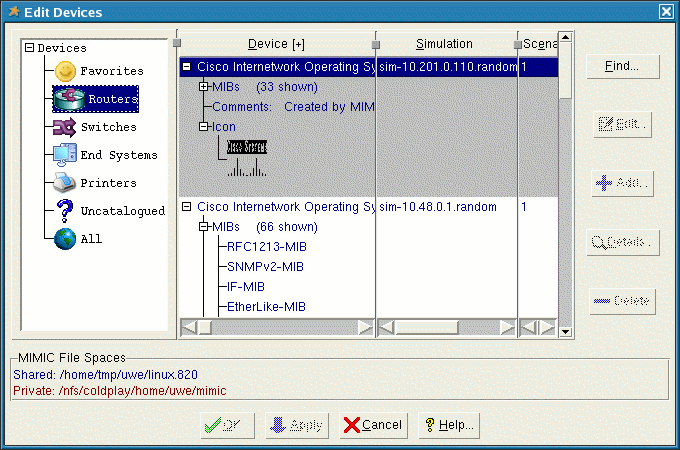
The Network Simulator offers a versatile, integrated, easy-to-use GUI-based network designer tool to create and replicate a network with SNMP, Telnet/SSH, NetFlow, TL1, TFTP and DHCP.

The researchers use network stimulation to check different set-ups that aren’t simple to present in real-life due to its complexity and experiments. Network stimulators are extremely helpful, offering controlled and reproducible environment to check latest networking protocols or transform the active ones. Also, simulation tools are very handy to design diverse network topologies employing various kinds of nodes. Various people like network designers, academic researchers, software developers and quality assurances are employed to design, validate, imitate and examining the performance of diverse network protocols.

Usually, network simulator tools will comprise a wide variety of networking technologies and protocols which aids the user to develop complicated network from fundamental building blocks. You can effortlessly design diverse network topologies employing different kinds of basic building blocks like end host, hubs, mobile users, routers, network bridges and optical layer designs. These tools are used also to check and assess the effect of diverse parameters on the protocols being experiential.

Network stimulator tools are accessible with diverse features. Some of the network simulators are MIMIC Simulator, OPNET, REAL, OMNeT++, QualNet, MIMIC Virtual Lab and J-Sim.

Also, some NetFlow implementations permit the surveillance of packets on the egress IP interface, but this should be employed with care.

Follow Gambit Communications on:-
facebook twitter linkedin

Wednesday, 21 January 2015

Build the Best Network Management Foundation

Finding the network management system that is best fitted for your infrastructure is a significantly crucial task. Fortunately, there’s no scarcity of monitoring and management tools that are capable of offering the vision most network managers require.

gambit_pic_1However, to develop the optimum network management base, the IT organization requires to take into account both its legacy environment as well as any latest technologies it plans to install. It is indispensable that systems offer visibility and control over each individual network component, but it is also crucial that they often a clear sight of traffic activity across the network as a whole. IT also requires a control-point from which they can troubleshoot any issues and whenever feasible, issue a mechanized response to solve a problem and limit downtime.

For this function, ventures require a console to act as a combined control point for the network as a whole. IT pros with diverse responsibilities can tap into the console to support their individual functional needs, whatever they’re. Furthermore, these systems must be engineered with a device that can offer a graphical illustration of the network that is based on the user’s precise task.

Whichever route an IT company picks to take to enhance its network management position, it is clear that network managers are require to consider their complete environment. Because each setting is different, each company’s path will vary. Whatever the businesses need is for the network administration platform, it should fit together with their infrastructure to sustain an environment that supplies best performance, proficient resource use and maximum dependability.

Tuesday, 20 January 2015

Guides to Configure SNMP Trap

Simple Network Management Protocol or SNMP is a protocol that offers network administrators a means to configure and control resource across the network. An SNMP Trap is a practice employed to send alarms and evaluate the data. Also, it aids troubleshoot any problems like hack attempt or bad requests. In this post, you will learn about how to configure SNMP in a Cisco Router.

mimic3• Right click on the "My Computer" icon and select “Manage.” Then click on the "Services & Applications" icon to extend the options. Click the "Services" option.

• Click on the "Details" button near the "SNMP Service" section. This will open to a new window. Type a responsive name in the "Community Name" segment. Click on the "Add to List" button.

• Click on the "Add" key in the "SNMP Service Properties” segment. Click the "Traps" tab.

• Type the name of the host into the matching protocol section. For example, if you employ TCP or IP, type the name of the host in the "IP" section. Click on the "Add" button. The host name will appear in the directory box.

• Repeat these above-mentioned steps to put in more Traps. Once you have added all the names then click on the "OK" key to save settings.

Friday, 16 January 2015

A Technical Overview of Cisco NetFlow

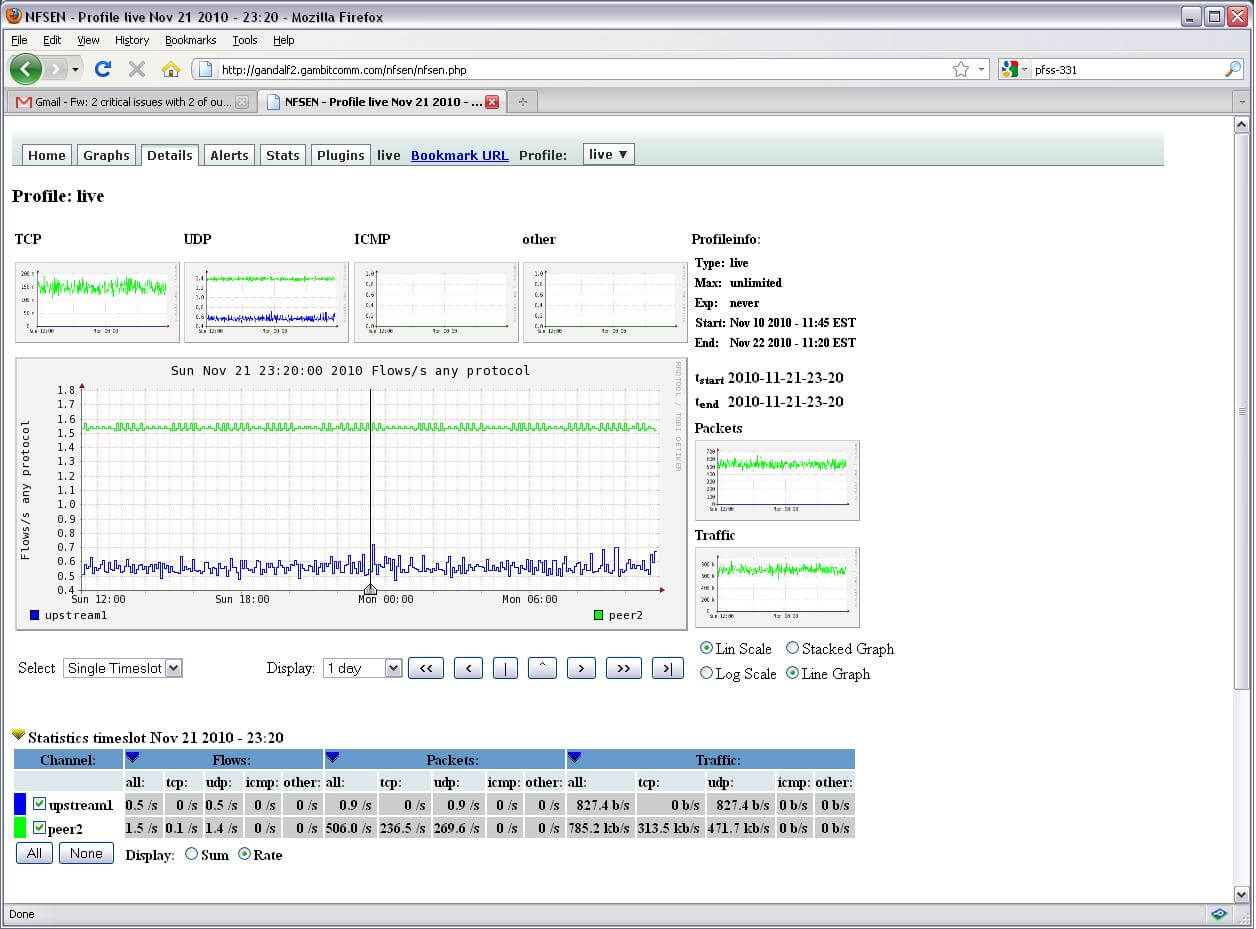
http://www.gambitcomm.com/site/products/images/netflow-solarwinds-nta.jpgNetFlow is a fixed instrumentation within Cisco IOS Software to distinguish network function. Visibility into the network is a crucial tool for IT pros. In reply to new needs and pressures, network operators are finding it difficult to comprehend how the network is behaving. They need to be aware of these:
• Application & network usage
• Network output and use of network resources
• The impact of transformations to the network
• Network irregularity and security susceptibilities
• Long-term fulfilment issues

Cisco NetFlow provides these information. It provides the visibility to the administrators about who, what, when, where, and how network traffic is flowing. As soon as the network actions are understood, business practice enhances and an assessment of how the network is used is available. This increased consciousness decreases susceptibility of the network as connected to outage and enables effective function of the network. Enhancements in network administration lower expenditures and drives high business profits by better use of the network infrastructure.

NetFlow offers solutions to several common issues faced by IT pros:

• Recognize new application network loads like VoIP or remote site additions

• Provide statistics to compute WAN traffic enhancement from application-policy changes; comprehend who’s employing the network and the network top talkers.

• Analyze sluggish network performance, bandwidth hogs and bandwidth use faster with reporting tools or command line interface.

• Reduce expensive upgrades by recognizing the applications causing blockage

• Irregularity detection & worm analysis along with applications like Cisco CS-Mars.

http://www.gambitcomm.com/site/images/netflow_sim_constant.jpgWhere NetFlow can be implemented in the network?

NetFlow is characteristically employed on a vital site since all the traffic from the remote sites is categorized and accessible within NetFlow. The site where NetFlow is installed may rely on the site of the reporting solution and the topology of the network. If the reporting collection server is located centrally, then setting up Netflow close to the reporting collector server is most favourable. Also, NetFlow can also be installed at remote branch sites.

Follow Gambit Communications on:-
facebook twitter linkedin